
Things to Do in Shimokitayama Village
- NARA Visitor Center & Inn

- 1 day ago
- 13 min read
Shimokitayama is a village in the southernmost reaches of Nara Prefecture, nestled within Yoshino District. The village’s footprint is split between the rugged Kii Mountains and the serene Yoshino-Kumano National Park, with much of its land designated as part of the Sacred Sites and Pilgrimage Routes in the Kii Mountain Range UNESCO World Heritage site.


Shimokitayama’s origins trace back over a thousand years, to the rise of Shugendo—the mountain ascetic tradition founded by the legendary figure En no Gyoja. The village sits at the heart of the Omine Okugakemichi, a pilgrimage route that drew mountain monks for centuries. Even today, the local shrine is said to have been founded by En no Gyoja himself.
At the time of writing, some 780 people call the village home. Seven hamlets form the core of Shimokitayama, arranged in a loose circle. The village is a quiet mountain settlement, far from the rush of cities, where life moves at the pace of the seasons. Residents live close to the land, many growing a lot of their own food. The landscape is a patchwork of fields, streams, and dense woods, and the air carries the scent of cedar and damp earth.
The village’s economy is built on agriculture, forestry, and fishing. Over 90% of its land is forested, and Shimokitayama has embraced a self-sufficient forestry model—small-scale, owner-operated logging that keeps the forest alive and the community independent. Clear streams feed fish farms, where ayu and amago are raised for local tables and restaurants.

Tourism is slowly growing. Kinari-no-Sato or The Shimokitayama Sports Park covers nearly 20 hectares, with fields, camping, cottages, and an adventure playground. There’s a hot spring lodge, restaurants, and plenty of outdoor activities. Anglers come for the streams and the lake, families for the scenery and the slow pace. It’s not a place to rush through. It’s a place to breathe, to listen, to remember what it means to live simply.
INDEX
Fudo Nanae Falls | The Zenki River | Mt. Shaka
Angler's Base SHIMOKITAYAMA
Angler’s Base SHIMOKITAYAMA is a multi-purpose outdoor facility based on the concept of a "Base for Anglers." Combining an outdoor shop, cafe, and lodging, it opened in August 2022 to enrich the lives of anglers visiting the famous bass fishing grounds of Ikehara and Nanairo. It serves as a hub where people gather to collect information and gear before a trip and share stories of their catch afterward.


The cafe features a large 3-meter-wide aquarium where you can dine while watching local stream life, and in spring, a deck offers views of blooming cherry blossoms along the picturesque Ikego River. For overnight stays, guests can choose between the Fishing Lodge—designed with the atmosphere of a North American fishing trip and decorated with vintage tackle—or the Glamping Lodge.


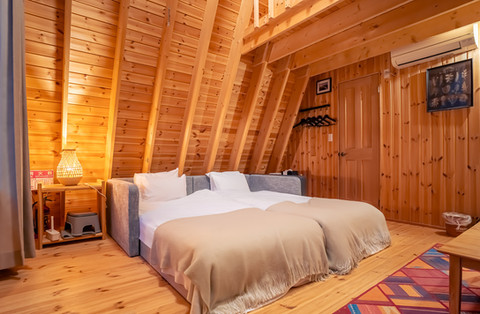


Glamping Lodge & Jacuzzi
The Glamping Lodge features "A-frame" log houses popular in North America since the 1960s, complete with floor-to-ceiling windows, loft space, private BBQ decks, and private outdoor jacuzzis (swimsuits required).


Glamping Lodge private BBQ SPace
Whether you are an avid angler or simply looking for a base camp for hiking the Odaigahara or Omine ranges, the facility offers a unique outdoor world. The Cafe & Dining area is open to everyone, from campers to touring motorcyclists. The signature menu features a rich Soup Curry, including the popular "Huge Chicken Leg" version marinated overnight, and a "Root Vegetable" version topped with crispy burdock. Authentic Neapolitan pizzas and baguette sandwiches are also available, making it the perfect stop for anyone visiting Shimokitayama.
Address: 418-1 Kamiikehara, Shimokitayama, Yoshino District, Nara 639-3805
Tel: 0742-87-2616
Hours: 11:00 - 21:00
Ikehara Dam
Ikehara Dam is a 111‑metre high, 460‑metre long arch dam in Nara Prefecture, built between 1962 and 1964 to generate hydroelectric power. The dam impounds the Ikehara Reservoir, which covers about 843 hectares with a total capacity of roughly 338 million cubic metres, fed by a catchment area of 300 square kilometres.

Nearby, in the same river system, lies Ikehara Lake (Ikehara-ko), a large artificial reservoir created by the construction of Ikehara Dam in 1964. As one of the largest man-made lakes in the Kansai region, it occupies a complex network of deep valleys in the rugged Kii Mountains, giving its shoreline a highly irregular, almost fjord-like shape. The lake is famous as a top bass fishing spot, home to many large black bass, and every year draws a steady stream of anglers from across the region. The dam’s powerful structure can be seen dramatically from the riverside park that follows the old riverbed immediately below it.

Access:
Address: Shimoikehara, Shimokitayama, Yoshino District, Nara 639-3806
Access to the lake area is straightforward: from the Ikehara bus stop on the local community bus, it is about 1.5 km on foot to the lake and the best viewing points.
Club Ikehara
Ikehara Dam is distinguished not merely by its scale, but by its biological exclusivity. It remains the singular habitat in Japan where the Florida-strain largemouth bass (Micropterus salmoides floridanus) was introduced, creating a specialized ecosystem that attracts anglers from all over Japan and beyond. Operating within this niche is Club Ikehara, a dual-service provider, integrating vessel rental with traditional minshuku guest house accommodations; a classic no-frills Japanese setup.

The Ikehara Reservoir is a complex deep-water system characterized by significant fluctuations in water levels and a labyrinthine structure of submerged timber and steep riparian cliffs. The Florida-strain largemouth bass has a propensity to grow quite large, and coupled with the nutrient-dense water that fills the reservoir, regularly sees the bass reach sizes exceeding 60com. These are the prized specimens that the serious anglers come for. The reservoir's high transparency necessitates a high degree of technical proficiency and stealth.


Club Ikehara offers a premier gateway to the legendary waters of the Ikehara Reservoir. For those seeking maximum time on the water, their highly sought-after Stay & Boat Packages offer exceptional value; for just the cost of a standard one-day boat rental plus a modest lodging fee of 3,500 yen per person, guests enjoy 1 and a half days of fishing. Whether you are a casual hobbyist opting for a license-free 2-horsepower boat (starting at 8,000 yen) or a seasoned pro requiring a high-power 60HP steering-cabin vessel (up to 27,000 yen), the fleet is meticulously equipped with livewells and complimentary fish finders. During the serene winter months, guests can even enjoy a 2,000 yen seasonal discount, making it the perfect year-round destination for those looking to experience the tranquil beauty and world-class fishing of Shimokitayama.
Club Ikehara Meet-up Point

Please note that the reception point is not located at the address specified on Google Maps. The map below is pinnned to the correct meetup point, so please use that.
It will lead you to a carpark on the way to Heisei-no-Mori Cottage, just beofore the Ikehara Dam viewing platform.
Access:
Address: 821 Kamiikehara, Shimokitayama, Yoshino District, Nara 639-3805 Tel: 07468-5-2345
Mobile: 090-3309-2145
Hours: 05:00 - 17:00
Kinari-no-Sato Sports Park
Kinari-no-Sato is a Sports Park Campground nestled at the foot of the Ikehara Dam, the largest arch dam in Japan. Since opening in 1984, it’s drawn visitors from the Kansai and Tokai regions, offering a blend of sports, outdoor activities, food, and hot springs.

Whether you’re here for a family getaway, a group retreat, or a solo adventure, the campsite welcomes everyone with open arms with 38 cabins and lodges, free Wi-Fi, and sites for all levels. The nearby “Heisei no Mori” bungalow area offers stunning views of the dam, while the surrounding nature puts you within reach of World Heritage trails and Japan’s most beautiful waterfalls. After a day outdoors, the renowned “Kinari-no-Yu” hot spring awaits to wash away the day’s fatigue.

Lodges
The “Kusunoki” and “Yasuragi” lodges are straightforward, no-frills accommodations that have hosted sports teams, school groups, and families for decades. Both offer Japanese-style, Western-style, and hybrid rooms, with a total capacity of up to 120 guests. The cottages are equipped with air conditioning, heating, and private bathrooms. Guests can choose from a variety of meal plans, including a local pork shabu-shabu course. For those working remotely, the workation plans let you connect with nature while staying productive.

Golf
Born from the villagers’ love of play, this mountain golf course is a 9-hole short course (par 30, 1,756 yards) that opened in 1957 as a community gathering spot. It’s open to everyone, from first-timers to tournament players. The course is closed every Tuesday. Play starts at 8:30 AM and ends at 3:00 PM.

Soccer Ground
The soccer grounds are designed for focus and fun. The main field, built in 2014, features long-pile artificial turf and is surrounded by mountains. There are two full-size goals for general use and two for juniors. The second field is also artificial turf (105m x 68m). The ground by the Ikogawa River is smaller (90m x 50m) and after a match, players can cool off in the river.

Tennis Courts
Three hard courts and three all-weather courts are available. Reservations can be made on the day or in advance at the main office. If you forgot your racket, there’s a rental service (for a fee). Note that some courts may have minor damage; check with staff for details.

Kinari-no-Yu Hot Spring
The “Kinari-no-Yu” is a sodium bicarbonate spring, known for its smooth, beautifying effects. It’s recommended for rheumatic conditions, neuralgia, muscle and joint pain, shoulder stiffness, women’s health, autonomic disorders, chronic digestive issues, fatigue, and minor injuries. The bath is open weekdays from 3:00 PM to 8:30 PM, weekends and holidays from 11:00 AM to 8:30 PM (last entry at 8:00 PM). The “Maki-no-Yu” bath uses century-old maki wood, while the “Tochi-no-Yu” offers a multi-bath experience with a stone bath, bubble bath, jet bath, sauna, cold bath, and outdoor bath with a walking pool. The bath is closed every Tuesday (or the next day if a holiday falls on Tuesday).

Kinari Restaurant
This local eatery specializes in Shimokita’s unique vegetables, especially the “Shimokita Haru Man” (Spring Man) variety. Menu highlights include the Haru Man udon and rice ball set (¥950), Ikehara Dam curry with local vegetables (¥1,200), deer and pork hamburger (¥1,600), smoked ayu from Shimokita (¥1,300), and waraji chicken katsu (¥1,250). For a more refined experience, an Italian chef’s course (¥4,400) is available, but only by reservation (at least one week in advance, minimum three guests, not available on weekends or holidays). The restaurant is open weekdays 11:30 AM–3:00 PM and 5:00 PM–8:00 PM (last order at 2:30 PM and 8:00 PM).


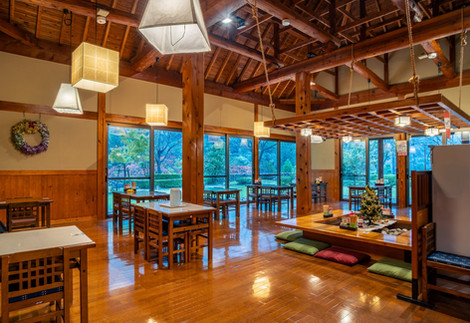


Kinari Shop
The shop sells local specialties, including Kinari-no-Sato's original products and udon made with the rare “Shimokita Haru Man” vegetable. It’s open weekdays 11:30 AM–8:30 PM, weekends and holidays 11:00 AM–8:30 PM. Closed every Tuesday (or the next day if a holiday falls on Tuesday).

Wanpaku Land
Designed by staff who know kids inside out, this playground is all about wooden play structures. The Tarzan rope is a big hit, along with jungle houses and other fun equipment. There’s a free adventure course and a 9-hole putting green (¥550 for two hours). The playground is next to the “Furusato Bunka Denshuukan” (Folk Culture Hall), which seats 50 and is popular with families and groups.

Campsite
The campgrounds here are an outdoor sports base, perfect for bass fishing on the dam lake, ayu fishing in the nearby rivers, sea fishing in Kumano, or hiking in the surrounding mountains. There are also free sites for those who want a more authentic camping experience, plus powered sites for those who need electricity. The tent sites can accommodate 70 tents.

Heisei-no-Mori Cottages
Heisei-no-Mori is a 10-minute drive from the sports park, with a panoramic view of Ikehara Dam—the perfect spot for bass fishing. It’s a romantic getaway for couples, or a peaceful place for a long-term “workation.” Some rooms allow pets (with an extra fee).


Heisei-no-Mori Bird Park
The Heisei no Mori Bird Garden sits on a peninsula jutting into Ikelhara Dam. The observation deck offers panoramic views of Nara’s mountains. Mornings are especially magical, with mist and birdsong creating a meditative atmosphere. It’s a place to slow down, breathe deeply, and listen to nature.

Access:
Address: 1026 Kamiikehara, Shimokitayama, Yoshino District, Nara 639-3805
Tel: 0746-85-2711
Hours:
Wed & Thus: 11:30 - 20:30
Sat & Sun: 11:00 - 20:00
Closed: Mon & Tue
Booking is only available through the “NAP” platform; phone reservations are not accepted, except for same-day inquiries after 8:30 AM. The campsite is open year-round, with no fixed holidays.
Lodge haru ∞ baru
After a round-the-world honeymoon, the owners of Lodge haru ∞ baru were drawn to Shimokitayama and its lush natural environment. There, they set out to create a life that feels gentle to both people and the planet—a philosophy they call “Ono Living.”

Inspired by years of travel, homestays, and farm stays, they learned from communities around the world about sustainable, circular ways of living. Settling in Shimokita-yama in 2017, they immersed themselves in the rhythms of the seasons, the blessings of the mountains and rivers, and the warmth of a close-knit community.

Now, they welcome guests to their tranquil corner of Shimokitayama village through a small private guesthouse on their land, offering a place where visitors can feel the simple joys of village life. Lodge haru ∞ baru is designed to be a second home, where people can relax in comfort, reconnect with nature, and experience the kind of warmth and kindness that makes them want to return. The name “Ono” reflects their surname, the Hawaiian word for “good,” and the symbolic axe—a tool for shaping life. Here, guests are welcomed as family, invited to slow down and enjoy a life that feels honest, grounded, and quietly joyful.


The property is a single-story, one-household building with two bedrooms, a living room (with air conditioning), a fully equipped kitchen, a terrace, and a bathroom with toilet. Guests can relax in a cozy, self-contained space that comfortably accommodates up to seven adults, making it ideal for small groups or families. The surrounding grounds feature a herb garden, farmland, and parking for up to five cars. Free Wi-Fi is provided, and guests are welcome to check in from 15:00, with checkout by 11:00.


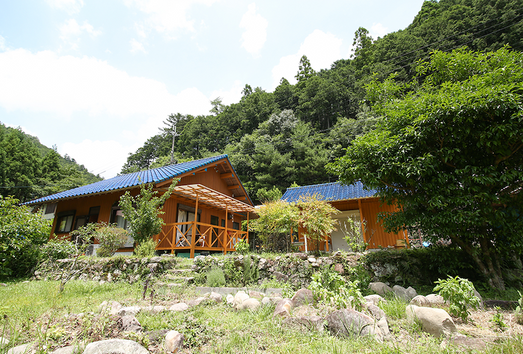
The guesthouse is designed for a relaxed, nature-connected stay. Guests can prepare meals in the well-equipped kitchen, using provided cookware, appliances, and seasonings, and enjoy local flavors with the option to purchase fresh river fish from a nearby farm. For a small fee, you can also enjoy an outdoor BBQ, with a host of options to suit your tastes.
Access:
Address: 351 Teragaito, Shimokitayama, Yoshino District, Nara 639-3803, Japan
Tel: 080-5989-4073
Fudo Nanae Falls
This is the largest waterfall in the Zenki mountain region, a seven-tiered cascade that plunges 160 meters from the deep mountains above Ikehara Dam. It’s one of Japan’s Top 100 Waterfalls, a place where nature’s scale is impossible to ignore. The falls were once known as “Maegami no Otaki,” visible only from afar on the old mountain pass called “Ushidaki-zaka”—a route now lost to reforestation and slope work. In the Taisho era, logging operations in Maegami opened up a new path: the “Kinnamichi,” a gentle mountain road lined with logs, used to slide timber down to the river below. The locals floated their cut wood down the Maegami River, even dropping it from the highest cascade to be processed at the riverbank.

After World War II, the construction of Ikehara Dam for hydroelectric power led to the creation of a new forest road along the cliffside in 1961. Today, the waterfall is best viewed from a roadside overlook along this path—a place that was once a secret pilgrimage site, now a popular spot for photography.


The seven-tiered falls are a symbol of Shimokitayama Village, a place where water, forest, and human history come together. The surrounding mountains nurture a rich flow of water, and the cliffs are covered with trees of all shapes and colors. Birdsong echoes through the quiet forest, a reminder that humans are just one part of this vast, repeating cycle. The main viewpoint is accessible by car, but there’s also a forest bathing trail that leads down to a platform near the third fall, where you might see a rainbow on a sunny day. Be sure to wear sturdy shoes and clothing, as some sections are slippery.
The most popular way to view the falls is from the roadside overlook, but there’s also a walking path to the base. Take care on the slippery rocks and steep steps.
Access:
Address: 3XV3+98, Shimokitayama, Yoshino District, Nara 639-3809
The Zenki River
The Zenki River (Zenkigawa) runs through a remote stretch of the Omine Mountain Range in Nara Prefecture, near the midpoint of the Omine Okugake-michi, the ascetic route linking Yoshino and Kumano. Fed by headwaters around Mount Shaka, river exemplifies the scenic beauty of Omine’s valleys and may rightfully be counted among Japan’s finest. Nara is sometimes dubbed the “Kingdom of Waterfalls,” and it draws devotees from all over Japan. Even so, the Zenki River is too often overlooked, passed over in favor of more conspicuous names.
It is not hard to see why the big drops command attention. A large waterfall reads instantly as a destination, but the Kii Mountains offer something rarer: valleys of quiet precision, water and stone working patiently in close quarters. What sets this range apart is not the drama of a single plunge, but the sustained grace and crystal clear waters of its gorges.


The name “Zenki” is itself braided into the region’s Shugendo lore and the figure of En no Gyoja. Tradition tells of Zenki and Goki, a married pair of oni once said to dwell on Mount Ikoma, feared for their violence until they were sharply reprimanded and brought to repentance, thereafter accompanying the ascetic in iconography as figures walking before and behind him. The story places them, in the end, at the foot of Mount Shaka, and the river running through that land came to be called Zenki River, its waters still remarkable in clarity. In sunlight or under cloud, the river holds an emerald-green transparency that exposes the riverbed and unsettles the eye’s sense of depth, making the landscape feel at once legible and strangely hard to measure.


There is a well-kept footpath that leads to the upper reaches toward Fudo Nanae Falls, a celebrated cascade that drops roughly 160m in seven tiers. Its scale resists a single, complete view, even from designated lookouts, but it leaves an unmistakable impression: grandeur here does not begin as grandeur, but as small springs lifting quietly from the mountain.
Access:
Address: Zenki, Shimokitayama, Yoshino District, Nara 639-3809
Mt. Shaka
Mt. Shaka (also referred to as Shakagatake) sits on the border between Totsukawa and Shimokitayama in southern Nara. It’s listed among The Second 100 Famous Mountains of Japan, and at 1,799 meters to offer a full 360-degree view across the Omine range and beyond. The summit is clean and angular—almost pyramid-like—and near the summit you’ll also find a first-class triangulation point—an official survey marker used as a high-precision reference for Japan’s maps.

Mt. Shaka also lies on the Omine Okugake-michi, a Shugendo pilgrimage route recognized as part of the UNESCO World Heritage listing for the Sacred Sites and Pilgrimage Routes in the Kii Mountain Range. This isn’t just a hiking line on a map; it’s a working religious corridor, still walked as a place of training. Near the summit sits the mountain’s best-known symbol; a statue of Shaka Nyorai (Shakyamuni Buddha), standing watch in the open air.

The statue’s story
Local tradition says the statue was carried up in the summer of 1924 by Masayuki Okada, better known as “Oni-Masa.” He was a famed goriki, a mountain porter, and the story insists he did it alone. Decades later, as the statue faced deterioration and the risk of collapse, temples from around Japan that use the Omine Okugake-michi as a place of ascetic practice joined efforts to restore it. In August 2007, the statue was erected once again on the summit of Mt. Shaka, returning the mountain’s quiet greeting to its rightful place.
Check out this great video by Brodie Farren, documenting
his 5-day solo hike along the Omine Okugakemichi
Access:
Address: Zenki, Shimokitayama, Yoshino District, Nara 639-3809
INDEX
Fudo Nanae Falls | The Zenki River | Mt. Shaka
Thank you for reading Things to Do in Shimokitayama Village.
If you enjoyed this, we think you'll lover these.



Author: NARA Visitor Center & Inn


Comments