
Things To Do In Takatori Town
- NARA Visitor Center & Inn

- 2 minutes ago
- 14 min read
Takatori lies within the ancient boundaries of Yamato no Kuni, one of the earliest provinces of Japan and sits on the old road that once connected Asuka to Yoshino and onward to Kii Province.
Among the highlights, Tsubosaka-dera Temple—the sixth Saigoku pilgrimage temple—welcomes visitors to its peaceful grounds containing the famed seated Sakura Buddha. Ichiohakayama Kofun and other ancient tombs dot the landscape.


According to the Nihon Shoki and other early chronicles, Takatori was once inhabited by immigrant clans known as Toraijin. Among them were the Yamatonoaya clan and the Hata clan, who brought new skills and culture from the Korean Peninsula. One record from 676 even forbids tree felling on Takatoriyama, a decree now recognized as Japan’s earliest forest conservation law. It suggests this land was already valued for sustaining those who lived nearby.
The Wamyo Ruijusho (the oldest extant Japanese dictionary) notes that the Hata clan cultivated medicinal herbs imported from ancient Korea in this region. Over centuries, Takatori grew around the practice of selling and manufacturing traditional medicines, a reputation that would endure well into the modern era.
INDEX
Tosa Kaido | Castle Pine Gate - Takatorijido Park | Samurai House
Musokan Visitor Center
Serving as the central gateway to sightseeing in Takatori Town, Musokan was originally the Yamazaki family residence, a prosperous kimono shop that flourished during the Taisho era. The building was carefully restored and reopened in 2000 as Musokan, the official base for tourism and cultural exchange in the region.

Within its wooden halls filled with natural warmth, visitors will find gallery exhibitions, historical documents, and displays showcasing Takatori’s long history as a center of traditional medicine. Locally produced goods are also sold, offering an opportunity to experience the craftsmanship and heritage of the town firsthand.





The center proudly serves as the official stamping point for Japan’s Top 100 Castles, where visitors can collect the Takatori Castle seal. During opening hours, the stamp is available inside the building; outside of these hours, a secondary station is set up to the left of the main entrance for convenience.
Access:
Address: 20-2 Kamitosa, 大字 Takatori, Takaichi District, Nara 635-0152
TEL: 0744-52-1150
Hours: 09:30 - 16:30
Closed: New Year's holiday
The Pharmaceutical Museum
Takatori-cho has preserved legends of early herbalist practices, where medicine was closely tied to local culture and daily life. This area was said to be blessed with abundant medicinal plants and animals. People learned about medical techniques and the effects of medicines from China, and blended them with secret recipes to create family medicines. It is written in the Nihon Shoki Empress Suiko, Prince Shotoku, and their entourage hunted for medicinal herbs in Takatori’s fields in 612 AD. These Yamato medicines were then spread throughout the country by mountain ascetics, marking the beginning of ‘Yamato medicine sales’.

At the Pharmaceutical Museum, located behind Musokan (the town's tourist information center), you can feel the history of medicine firsthand. Founded as an educational center to embody Takatori’s rich tradition as the town of medicine, the Pharmaceutical Museum invites visitors to explore its unique history. Housed within the renovated warehouse, among its highlights are displays of traditional manufacturing utensils and classic retro medicine packaging - all providing a vivid glimpse into the region’s celebrated pharmaceutical heritage

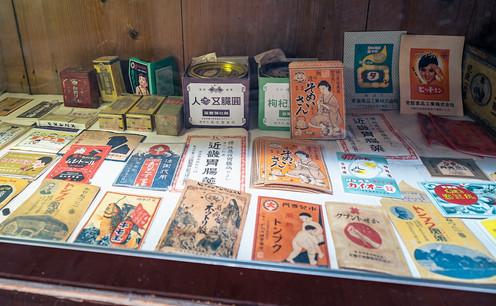


Visiting The Pharmaceutical Museum
Admission is free and no reservation is required.
TEL: 0744-52-1150
Hours: 09:30 - 16:30
Closed: Monday & New Year Holidays
Takatori Castle Ruins
Takatori Castle once sat atop Mount Takatori, 583 meters above sea level, southeast of Takatori town. Once famed for its 29 white-plastered yagura turrets, the mountain castle was admired in song and regarded as a symbol of Tosa (the old name of Takatori).





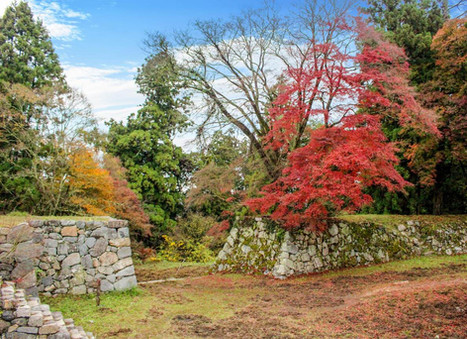


Built across terraces and baileys covering roughly 60,000 square meters, it stretched more than 30 kilometers around the mountain. Counted among Japan’s three great mountain castles alongside Bitchu Matsuyama and Iwamura, its massive stone walls still testify to the grandeur of the Sengoku era.


After its abandonment in 1873, much of Takatori Castle disappeared into the forests. Gates and buildings found new uses around town; the Ninomon Gate became the gate at nearby Kojima-dera Temple, another became part of a local clinic, and one was later restored as the entrance to a children’s park. Though the wooden structures are gone, the stone ramparts remain in remarkable condition, reminding us of the castle’s prior grandeur. Visitors can reach the site with a 90 to120-minute walk from Kintetsu’s Tsubosakayama Station.
Here is a CGI rendering of what the castle looked like in its heyday. These videos were created as part of the "Takatori Castle CG Reconstruction Project," primarily by students from Nara Sangyo University (now Nara Gakuen University).
Access:
Address: Takatori, Takaichi District, Nara 635-0101
Tel: 0744-52-1150
Hours: 24hrs
Tosa Kaido
Tosa Kaido, the old castle-town street leading toward Takatori Castle. The central street of Takatori once beat at the heart of a 25,000‑koku domain, running straight toward the mountain‑top fortress, a road you can still walk in the footsteps of the people who built it.

Edo‑period merchants’ houses still huddle along the Tosa Kaido, complete with low eaves and lattice windows. Water channels run on either side of the road, and underfoot the paving stones are the same ones salvaged after the Great Hanshin Awaji Earthquake, cobbles that once carried tramcars along the old Hanshin line. Here and there, tiles painted with medicinal herbs are set into the stone, a subtle reminder that a large part of the castle town's history is linked to medicine.

The name Tosa on this street reaches all the way back to the early Asuka period.People brought from Tosa, in today’s Kochi, to help raise the Yamato court’s capital are said to have never made it home, instead putting down roots right here. Locals held on to the Tosa name so tightly that when the towns and villages were merged in 1889, whether the new village should be called Takatori or Tosa was hotly contested.



The long, slender castle town grew up facing Mount Takatori head on, spreading out around what are now the Kamidosa and Shimodosa districts. When the Uemura clan took over in 1640, life atop the mountain was deemed too impractical, and the lord and his retainers shifted their residences down to line this very road. In time, the street became the town’s backbone, the route that carried you straight to the castle’s main gate.


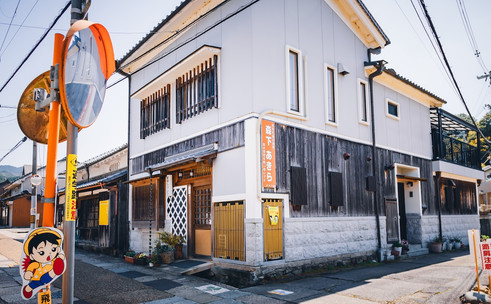
Today the Tosa Kaido is a quiet mix of homes, small shops, and restaurants catering to visitors, and the official hiking route up to the Takatori Castle ruins still faithfully follows its line. Most of the old merchants’ and townspeople’s houses were single story buildings with only a cramped loft‑like upper level, a style known as tsushi nikai. Out of deference to the lord, nobody was allowed to look down on his procession, so second floors were kept low, and the street‑facing windows were fitted with slatted renji lattices and mushikago windows that let in light without giving a commanding view. Gaps between houses were plastered over or boarded up so no one could slip in and wait in ambush.


Even now, these old townhouses line the stone‑paved Tosa Kaido; walk it slowly and you start to feel as if you’ve stepped sideways into the Edo period. As you follow the Tosa Kaido with Mount Takatori floating on the horizon, it becomes clear that everyday life in the castle town and the steep road to the mountain fortress were always joined by this single, unassuming street.
Takatori Castle Ruins Pine Gate (Takatorijido Park)
Takatori Castle Pine Gate (Matsu-no-mon) is regarded as one of the former structures of Takatori Castle and is believed to have been a gate like the one shown on the information-board diagram in the park. The gate was relocated in 1892 to serve as the school gate of Tosa Elementary School, after many castle buildings were demolished when the castle was abandoned in the early Meiji period.

In 1944 a fire destroyed part of the structure, and it remained dismantled for some time. The present gate is a reconstruction, using materials preserved by Mr. Usui of Kongoriki Brewery Co., Ltd., carried out in response to strong requests and financial support from local residents, and based on the portions indicated in brown on the diagram displayed at the park.


Every year, the town celebrates its feudal past and historic achievements in Noh theater development, traditional healing techniques, as well as trade and commerce:
The event program is as follows:
Japanese drum performance
Matchlock gun demonstration
Nanjing bamboo blinds
Sword fighting demonstration
Historical parade entrance

You can browse various markets stalls with local and neighboring district produce, as well as crafts and other items. At the exhibition stall, you can dress-up in period style armor and costume.
Access:
Address: 38 Shimokoshima, Takatori, Takaichi District, Nara 635-0151
Hours: 24 hrs
Tashio Family Samurai House
The Tashio Family Samurai Residence stands as one of the few surviving examples of samurai architecture in the region, alongside the Uemura family estate. The residence and its prominent gate, or Nagayamon, date back over 300 years to the Edo period. The development of this area began in the mid-17th century when the administrative center of the domain was moved from the mountaintop castle to a Shimoyashiki (lower residence) at the base of the mountain. This shift led to the sequential construction of high-ranking samurai estates throughout the district.

The Nagayamon serves as a distinctive architectural landmark, featuring a central entrance flanked by rooms on either side. These rooms are constructed with weatherboard siding on the lower sections and finished with traditional white shikkui plaster above. The roof is built in the Irimoya (hip-and-gable) style, which was historically finished with Sangawara tiles.


Notably, the structure retains rare "Yoriki windows," also referred to as Musha (warrior) windows. These feature a horizontal latticed design with eaves, intentionally built to provide superior lateral visibility for monitoring the surroundings compared to standard vertical windows. Similar horizontal latticework is visible on the wall beside the main entrance, suggesting the site was designed with security and surveillance in mind. While the interior remains closed to the public as it continues to function as a private residence, the exterior serves as a significant historical testament to the Uemura Domain’s martial heritage and the architectural character of the former samurai district.
Access:
Address: Shimokoshima, Takatori, Takaichi District, Nara 635-0151
Ishikawa Clinic
Ishikawa Clinic, located on Tosa Street, is a dermatological clinic with a medical lineage dating back to the Edo period when the Ishikawa family served as the castle physicians for the Takatori Domain. The current practice stands apart from typical dermatology clinics; taking a fully holistic approach starting with dietary guidance and delivering custom-formulated ointments.

Along with a couple of centuries of history, the clinic famously boasts the gate of the Former Takatori Domain Lord's Lower Residence as its front entrance. This gate, rebuilt at its current location, was originally the grand entrance to the residence of the Uemura family, who were the hereditary lords of the domain. As one of the few surviving architectural pieces of the Takatori Castle complex, it is a point of local pride.


Since the early Meiji period, the hospital has continued to serve the local community, blending inherited wisdom with up-to-date medical practice. Ishikawa Hospital is particularly renowned for its treatment of chronic skin conditions, such as atopic dermatitis, drawing patients from across Japan.
If you plan on visiting, please keep in mind that this is a functioning practice with actual patients and not a tourist attraction.
Access:
Address: 331 Shimotosa, Takatori, Takaichi District, Nara 635-0153
Tel: 0744-52-2008
Hours: 8:00 – 11:00 & 13:00 - 14:00
Closed: Wednesday & Sunday
Takatori Town Hina Matsuri Dolls Display
Hina Matsuri, or Girls’ Day, is celebrated every March 3rd in Japan and originates from the ancient ritual where straw dolls were floated down rivers to wash away evil spirits. During the Heian Period (794–1185), this practice evolved into displaying dolls at home as prayers for children’s health and prosperity, especially daughters.

Takatori town has recently become famous for its own special Hina Doll festival held each year. Started almost 20 years ago, the festival is called "Machiya no Hina-matsuri" (町家のひな祭り) and in 2026, it will run from February 28 to March 15. During the festival, Hina doll displays are set up all around town, with the main display consisting of some 500 dolls, some of which are over a hundred years old.

A unique feature of Takatori's 'Machiya no Hina-meguri' (Town house Hina tour) is that the dolls are displayed quite literally everywhere throughout the town; inside shops, in cafes, in the street and even in the windows or hallways of private homes. All in all, there are just under 100 separate displays on show, and getting around all of them is quite a challenge.

The highlight is possibly the enormous exhibit on display next to the town meeting hall, which includes a mountainous, multi-staged set of dolls and a diorama of Takatori castle and its environs.
Saryo Hana Yamato
Takatori town's connection to traditional medicine is also reflected in Saryo Hana Yamato, a restaurant, which specializes in yakuzen cuisine—meals designed to promote health by using medicinal herbs. Founded in 1904 , Saryo Hana Yamato is a classic Japanese restaurant located in picturesque residential area where guests can dine while overlooking a serene pond garden.

Under the direction of head chef Teiyuki Nakagawa, the dishes bring together seasonal ingredients, medicinal herbs, and beautiful presentation to nourish both body and spirit. Every dish balances flavor, health, and artful design. Guests are warmly guided through their meal by an energetic and charming hostess, known for sharing insightful explanations about each herb and its benefits. All ingredients are free from additives and carefully selected for their quality and nutritive value with many of the vegetables grown in their own feilds nearby.


The dining experience often begins with a glass of safflower aperitif, believed to promote circulation and uplift the mood, followed by courses like herbal tempura, amago with lily bulb essence, fresh sashimi, and handmade noodles kneaded with medicinal plants, carefully selected and presented to reflect the season. One of Saryo Hana Yamato's specialities is their roasted Korean ginseng. Yakuzen Bento: ¥3,500/¥5,500
Access:
Address: 1064 Shimizutani, Takatori, Takaichi District, Nara 635-0103
Tel: 0744-52-2289
Hours: 11:30–14:30, 17:00–20:30 (Sundays & holidays 11:30–20:30)
Closed: Tuesdays (open upon request for parties of four or more)
Ichiohakayama Kofun
A kofun is a large burial mound constructed in Japan between the third and seventh centuries, primarily for influential figures like local rulers or members of the elite. These tumuli are remarkable for their various shapes, most famously the keyhole form known as zenpo-koen-fun, visible from above as a circle joined to a square. The internal chamber, often stone-lined, was used for funerary rituals, with grave goods buried alongside the deceased as a sign of status and belief in an afterlife.

Where the slopes of the Ryumon Mountains lean toward the wide Nara Basin sits the Ichiohakayama Kofun, a fine example of the keyhole shaped burial mound only found in Japan from the late Kofun period. The tomb extends about 63 meters, with both circular and square ends reaching roughly eight meters high. A broad moat, eight meters wide and ringed with an exterior bank and still made be made out today. Excavations begun in 1978 by the Nara Prefectural Kashihara Archaeological Institute revealed a horizontal stone chamber tucked inside the rear circle. Its opening faces southwest. Within lies a house-shaped coffin sculpted from tuff, one of the largest known examples in the prefecture.

A later excavation by Takatori’s Board of Education in 2004 added another detail: a stone-paved passage discovered behind the chamber, cut for moving the coffin into place. The chamber itself, 9.45 meters long and 2.45 wide, is lined with rare foundational stones found in only a few such tombs nationwide. Archaeologists even unearthed wooden haniwa carved in the shape of birds, an unexpected survival of ancient craftsmanship, with one nearly three meters long. The mound's form and goods found in side date construction to the early 6th century.


The Kofun’s presence here is not accidental. Nearby lie the Ichio Miyazuka Kofun, the ruins of Kose Temple, and the Mizudoro Kofun — a network of authority once held by the Kose clan, who managed both diplomacy and war along the straits leading to the Korean Peninsula.

Today, the mound stands surrounded by rice fields. The view hasn’t changed much in fifteen centuries. Visitors can climb the slope, walk its perimeter, and gaze toward the horizon where the Ochi Hills rise. Every summer evening, during the Takatori Furusato Natsu Matsuri, lanterns are lit along the mound’s edge.
Access:
Address: Ichio, Takatori, Takaichi District, Nara 635-0123
Hours: 24 hrs
Tsubosaka-dera Temple
Glancing out from the Kintetsu Yoshino Line, visitors are greeted by the imposing white marble statue of the Standing Buddha on the mountainside, a gesture of gratitude from India for the temple’s humanitarian work fighting leprosy since 1964. Known as "The Tenjiku Torai Great Kannon Statue," this monumental figure—standing 20 meters tall and weighing 1,200 tons—sets the stage for a temple whose history intertwines legend and charity. Founded in 703 by the Buddhist ascetic Benki Shami, Tsubosaka-dera earned its name “Jar on the Mountainside Temple” from the discovery of a golden Senju Kannon Buddha statue, reportedly unearthed inside a lapis lazuli jar after an ethereal encounter with Buddhist scripture and blue light on the mountain.

Revered for centuries as the Temple of Eye Health, Tsubosaka-dera gained fame after Benki Shami miraculously cured the Empress's blindness with a prayer ritual, leading her to enshrine the Senju Kannon and commission the temple’s construction in 717. More legends followed, but its reputation for healing persisted. Recently, Indian-made white marble Buddhas, bas reliefs, and the Tenjikutorai Daiseki-do Hall—modeled on Ajanta Caves and built by 120,000 artisans—joined the lineup of historic Japanese architecture: the Hakkakuen-do Octagonal Hall, a pagoda from 1497, and gates dating back to 1212, each contributing to the temple’s peculiar blend of mysticism and humor. On special occasions, a comically oversized pair of glasses, affectionately called "Buddha’s spectacles" are placed at the base of the pagoda. It is said that walking figure-eights around them works for good eye health, if only for another year.


Each spring, a new wave of attention washes over Tsubosaka-dera when cherry blossoms envelop its seated Buddha—"The Sakura Buddha," unveiled in 2007—transforming the statue into a viral sensation. From a specially constructed viewing platform, crowds wait patiently for a fleeting moment alone with the Buddha, as it gazes serenely through clouds of pink petals. The temple, just under an hour from Nara Visitor Center & Inn, welcomes those willing to make the journey, promising magical scenery alongside the transformative legends that shaped its reputation.


Access:
Address: Tsubosaka 3, Takatori, Takaichi District, Nara, 〒635-0102
Hours: 8:30 - 17:00
Phone: 0744-522-016
Tsubosaka-dera Temple is about 4km from Tsubosakayama Station on the Kintetsu Yoshino Line just under an hour away from the Nara Visitor Center & Inn. Take the train from Kintetsu Nara Station, change to a Kashihara Jingumae bound train at Yamato Saidaiji Station, and then a Yoshino bound train at Kashihara Jingumae, get off at Tsubosakayama Station, the third stop.
500 Rakan
Between Tsubosaka-dera Temple and the ruins of Takatori Castle lies the site known as the 500 Rakan, a cliff face carved with an array of stone figures representing the Buddha’s enlightened disciples. These statues, called Gohyaku Rakan, are not literally five hundred in number; instead, the figure is symbolic, reflecting a long tradition in Buddhist art. It makes for a quiet, contemplative pause for those hiking between the temple and the castle remains.

In Japanese Zen Buddhism, rakan—also known as arhats—are the “worthy ones,” ascetic disciples who have reached enlightenment through rigorous personal practice and are revered as guardians of Buddhist law between the death of Shakyamuni and the coming of Maitreya. Their status is such that they have become enduring figures in Japanese religious art, especially from the Kamakura period onward, when Zen monks, drawing on Chinese painting, began to depict them with strikingly individual faces and postures that reflect both their spiritual effort and their human particularity.


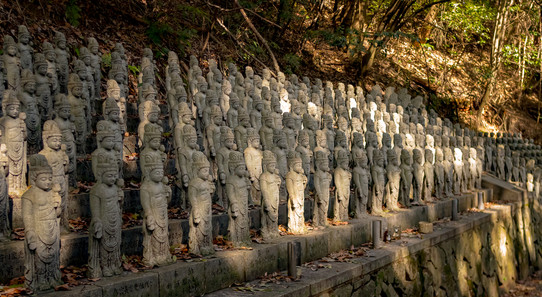

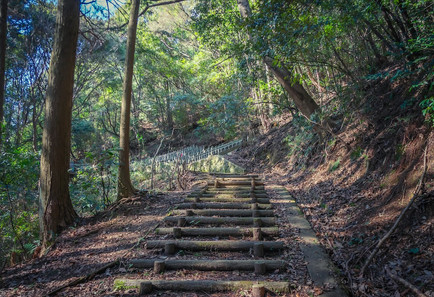
The site can also easily be reached by car from the temple. There's a signpost and space for about 3 cars. It is just a couple of minutes walk from there until a neatly ordered row of fairly recent stone statues come into view. Just past that is the true 500 Rakan carved directly into the rock face. There are also statues of Fudo Myoo and mandalas etched into the cliff.


Research has revealed that the stone lantern in front of the Rakan rock bears an inscription dating the work to Keicho 12 (1607), while a nearby way-marker suggests Keicho 9 (1604), leading to the conclusion that these carvings—now considered the inner sanctuary of nearby Tsubosaka-dera—were made in the years just after the Battle of Sekigahara.
Access:
Address: Takatori, Takaichi District, Nara 635-0101
INDEX
Tosa Kaido | Castle Pine Gate - Takatorijido Park | Samurai House
Thank you for reading Things To Do In Takatori Town.
Here are some articles on other charming areas you should visit.


Author: NARA Visitor Center & Inn


Comments