
Shimoichi Town & Kurotaki Village
- NARA Visitor Center & Inn
- Feb 6
- 14 min read
Shimoichi Town, nestled in the heart of Nara’s Yoshino District, is a town shaped by mountains and clear streams. It sits in the northwestern corner of Yoshino with eighty percent of its 62 square kilometers is forest.


For centuries, it’s been the gateway to the deep valleys of Oku-Yoshino, a crossroads for trade and culture between the highlands and the plains.
Today, Shimoichi’s population is about 4,300, and its identity is still tightly bound to its lush landscape, clear waters, and the rhythm of the seasons. Shimoichi is known for its timber industry, for its konnyaku, a jelly-like food made from yam and being home to Tsurubesushi Yasuke, a restaurant that’s been operating since the 17th century and is famous for its role in the kabuki play “Yoshitsune Senbon Zakura.”
The town is a quiet place—no passenger trains pass through, and it has only an elementary and a junior high school. There’s no high school.
The name “Shimoichi” itself means “lower market.” Since the Heian period, it’s been a market town, connecting the mountains of Yoshino with the Yamato plain. It’s surrounded by Oyodo, Yoshino, Gojō, Kurotaki, and Tenkawa. The landscape is green, the air is clear, and the pace is slow.

Kurotaki Village occupies a quiet corner of Yoshino District in Nara Prefecture. As of January 1, 2025, its population stands at 536 souls. Surrounded by dense forests, this authentic mountain settlement feels the trees in every corner of daily life.
Ninety-seven percent of the land lies under woodland, producing valuable hinoki and sugi timber ranked among Japan’s finest planted forests. Valleys here cradle the headwaters of the Yoshino and Kino rivers
Reach Kurotaki by bus from Shimoichiguchi Station, a ride ending at Yoshino-ji Kurotaki Roadside Station. Three departures run daily.
Shimoichi Town
Woodworking thrives in Shimoichi. It's the town's backbone industry. Shimoichi claims the origin of waribashi—those disposable chopsticks you snap apart. Tracing back to before the Nanboku-cho period (1336 to 1392) they're prized for their faint cedar scent and even handsome grain. Thinnings and scraps from the forest are used to make waribashi making them eco-friendly.

Shimoichi is also home to Sanbo tray manufacturing. Sanbo is a stand for carrying offerings and sacrifices or as a stand for offering at a Shinto altar. you may have seen them during New Year when they are used to hold Kagamimochi mirror-shaped rice cakes.

Sanbo trays begin with a single sheet of Yoshino hinoki, where a craftsman scores a precise slit deep enough to coax the wood into curving when soaked, but not so much that it splinters. This bending technique, passed down since Emperor Go-Daigo carried offerings on them seven centuries ago (when Yoshino briefly became an imperial seat), defines Shimoichi's mastery. Production peaked during the high-growth '60s, with some 30 workshops humming in Yoshino alone... now just four remain here, five nationwide, yet Shimoichi commands over 80% of Japan's market for them and those crafting skills earned a spot on Japan's Heritage list.

Yoshino's branded cedar forests fuel it all, abundant from thinnings, yet the average age of those involved hovers near 70 years old, with viable successors low in number. Still, I-turn migrants (an individual who moves from a large metropolitan area to a rural one, typically for lifestyle reasons or to engage in farming or community revitalization efforts) and local revival efforts are slowly bringing younger energy and fresh ideas to the industry.
KITO Forest Market
KITO Forest Market is the perfect example of what imagination, innovation and courage can accomplish when trying to revitalize rural communities. Once an elementary school, PAL Group Holdings, a fashion and lifestyle brand, renovated the building and expertly turned into a hybrid space of shops, a cafe-restaurant, a kids’ area, farmers’ market, art gallery and event space. Built on the idea of “adding one more step, playfully,” visitors are invited to linger, gather, and rediscover the quiet value of everyday things.



Cafe-restaurant
KITO’s restaurant is a celebration of Nara’s timber and materials, where every detail reflects the region’s craftsmanship. The interior centers on a wood-fired pizza oven, surrounded by chairs made from Yoshino cedar by local Shimoichi artisans, while a large communal cedar table invites conversation among strangers. Pressed flower art, mostly medicinal herbs harvested nearby, adorns the walls.

Shimoichi’s food culture is deeply rooted in history, with generations cultivating fruits, herbs, and aromatic plants. The mountainous terrain limits yields, making each ingredient precious. At KITO, guests savor salads, pizzas, and desserts made from local produce.


From ingredients to firewood, every dish emphasizes local sourcing. Pizzas are baked in the wood-fired oven using produce from nearby farms, and the firewood comes from thinned cedar and cypress trees harvested in the area. The menu changes with the seasons, ensuring a fresh, authentic experience that highlights the flavors of Shimoichi.





KITO Shimoichi Brewing
KITO Shimoichi Brewing creates beers that capture the essence of Shimoichi’s agriculture. Their lineup includes craft beers with over 50% fruit as a secondary ingredient, herb ales made with medicinal and aromatic herbs, and pale ales crafted with carefully selected hops. Each beer is richly aromatic and offers a lively, approachable flavor, even for those who don’t usually enjoy beer.


Shopping
Shimoichi’s rich culture comes alive in the market and shop areas. The market section offers fresh fruits and vegetables from local farmers, as well as jams and condiments made from these ingredients. In the shop area, guests can find locally sourced timber—perfect for DIY projects—alongside wooden crafts and small goods made by regional artisans. KITO curates a selection of specialty items, focusing on products from Nara Prefecture, so there’s always something unique to discover.


KITO also introduces original items that reinterpret the region’s specialties from a fresh perspective. Using local produce and herbs, the facility produces craft beer and sweets, and plans to expand into lifestyle goods, cosmetics, and fabric items crafted by local makers—items that capture the spirit of Shimoichi and make memorable souvenirs.


Connecting People
As a vibrant hub, connecting people, ideas, and experiences, every visit is designed to spark new connections, inspire action, and foster a positive, sustainable community. The space is flexible—offering rental offices for entrepreneurs and free rooms for events, gatherings, or creative exchange. Regular activities and workshops provide fresh opportunities for collaboration.


Upstairs, the gallery celebrates local craftsmanship and artistry, serving as both a showcase and a meeting place for the town. Exhibitions and special projects highlight Shimoichi’s heritage, with updates shared online for visitors to follow. Through curated displays and community-driven initiatives, the gallery brings the essence of Shimoichi’s creative spirit to life.
Experience
KITO offers a place to experience the culture of Shimoichi firsthand. A dedicated DIY shop hosts workshops that make the most of Shimoichi’s abundant wood resources. Collaborating with local businesses, KITO organizes several wood- and forest-themed workshops each month. These sessions use various types of timber and repurposed offcuts from local industry, giving visitors hands-on experiences and new insights, all wrapped in a playful, creative atmosphere.



Takeout Stand
KITO’s café offers a refreshing break with its original blends and craft drinks. The signature KITO coffee, a fruity blend crafted by ROKUMEI COFFEE—one of Nara’s renowned specialty roasters—is joined by herb-infused coffees that showcase the region’s unique flavors. Seasonal gelato, made with local Nara fruits and specialties, rotates throughout the year. The interior, with its cheerful yellow accents and fruit-themed quilting, creates a lively atmosphere that lifts the spirits.


Wood Park
The former gymnasium has been repurposed into a unique kids’ play area designed to let children experience the warmth and texture of wood. The centerpiece is a playful “bookshelf play structure,” complete with a large selection of books and a large maze made from repurposed chopstick offcuts. Rain or shine, children can explore and engage with nature-inspired design, while parents can relax nearby, or watch above from the gantry.


Beyond Shimoichi, KITO also highlights the wider appeal of Nara Prefecture. Collaborating with local makers, the venue hosts a variety of workshops and plans special tours that showcase the hidden gems of southern and eastern Nara, including the Okuyamato region. KITO is well positioned to be not just a fun destination in itself, but a dynamic gateway to discovering the full breadth of Nara’s charm.
Access:
Address: 664-1 Zengi, Shimoichi, Yoshino District, Nara 638-0003
Tel: 0747-58-8117
Hours: 09:00 - 17:00
Tsurubesushi Yasuke
Tsurubesushi Yasuke is widely recognized as Japan’s oldest sushi restaurant, with a history stretching back over 800 years to its founding in the late 1100s in Shimoichi. The restaurant is celebrated for its deep connection to Japanese food culture and its appearance in the famous bunraku puppetry and kabuki play "Yoshitsune Senbon Zakura." The current three-story wooden structure was built in 1939, featuring spacious tatami rooms with garden views, evoking the atmosphere of a traditional ryokan. The restaurant’s walls are adorned with memorabilia and historical artifacts, further immersing visitors in its storied past.


Tsurubesushi Yasuke is best known for its rare local specialty, ayu sushi made with sweetfish (ayu) caught from the nearby Kii river system. Ayu sushi is not served raw; instead, the fish is salt-marinated and then grilled. Dishes are served in a multi-course style and complemented by local Yoshino sake. If you don't speak Japanese, we recommend you book via your hotel.





Access:
Address: 533 Shimoichi, Shimoichi, Yoshino District, Nara 638-0041
Tel: 050-5487-2030
Hours: Lunch: 11:30 - 14:00 (L.O. 13:30) Dinner: 16:30 - 20:00 (L.O. 19:45)
Closed: Wednesday & irregular
*Cash only
*Same-day cancellations will be charged at 100% of the reservation amount.
Tsurumanman-do Confectionary
Tsurumanman-do was founded in Gojo City in 1893. The Shimoichi shop was established about 75 years ago as a noren-wake (a branch authorized to use the original name) by the founder’s daughter and her husband, who had trained at the main Gojo shop. While the Gojo shop is the "headquarters," the Shimoichi branch has developed its own distinct reputation and local favorites while remaining true to the founder's vision of crafting traditional Japanese sweets with a focus on seasonal flavors and handmade care.

The name Tsurumanman-do (鶴萬々堂) is a blend of traditional Japanese symbolism and business aspirations


Tsuru (鶴): The Crane In Japan, the crane is a powerful symbol of longevity and good fortune (famously said to live for 1,000 years). In the context of this shop, it was added to represent "celebration" and "auspicious events," as their sweets were often used for weddings and festivals.
Man-Man (萬々): Abundance and Continuity The character 萬 (man) means "ten thousand," but in a name, it represents "infinity," "countless blessings," or "eternal prosperity." Repeating it as 萬々 (man-man) emphasizes the wish for the business to flourish and continue for many generations.
Do (堂): The Hall/Shop This is a standard suffix for traditional Japanese shops, especially pharmacies and confectioneries, denoting a "place" or "hall" of business.

Tsurumanman-do sell a wide range of traditional Japanese sweets, but their most famous product is the "Sakura-ayu." This is a fragrant, hand-baked castella sponge cake shaped like a sweetfish (ayu), filled with soft, chewy sweet rice cake. Despite being tucked away in the Nara countryside, the shop is quite busy throughout the day with peple coming from all over to pickup some tasty guilty pleasures.
Access:
Address: 61 Shimoichi, Yoshino District, Nara 638-0041, Japan
Tel: 0747-52-2473
Hours: 8:30 - 18:00
Closed: Sunday
Hirohashi Plum Grove
Plums came to Japan from China, not for their fruit, but for their healing properties. Over centuries, their fragrant and delicate blossoms became beloved. In the days of the Man'yoshu, when poets sang of flowers, they meant plum, not cherry. There are now hundreds of cultivated varieties, each with its own color, its own number of petals. And still, the fruit remains a taste of Japan. In Hirohashi Plum Grove, some 5,000 trees, including the prized "Shirokaga," yield fruit that carries the region’s character.

Hirohashi is one of Nara’s three great plum groves, alongside Tsukigase and Kanano. The blossoms begin to open in late February, reaching their peak by late March. Spread over 25 hectares on the northern slope of Hirohashi Pass, the grove is a tapestry of white, red, pale pink, single and double petals.


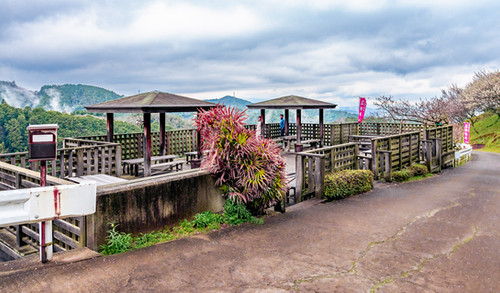
The view stretches to Mt. Kongo, Mt. Katsuragi, and the Nara Basin. Even in early summer, when green plums ripen, the grove rewards the visitor. Well-maintained trails invite a leisurely hike. Every year in mid-March, the Hirohashi Plum Grove Festival draws crowds.


At the summit is where the Hirohashi castle is believed to have once stood. This was the stronghold of the Hirohashi clan, supporters of the Southern Court in medieval times. The trail to the top is steep, as mountain castles often are, and the climb brings both panorama and a sense of the past.





Scattered houses dot the mountainside, making it possible to drive up and wander through the grove at your own pace. Two walking courses are marked. The Plum Grove Course runs about 2.5 km one way, taking roughly 40 minutes. It begins at Hirohashi Pass Bus Stop and leads to Gojo Onsen Akitsuso. Here, you’ll walk through a "plum grove village," where people and nature have long shared the same ground. The Tenshu-no-Mori Course is shorter, about 1.2 km round trip taking around 30 minutes. From Hirohashi Pass Bus Stop (453m), you ascend steeply 150m to "Tenshu no Mori." The scenery from this spot is unforgettable. Deep in the grove, a thousand plum trees wait.
Access:
Kurotaki Village
People have lived among the ancient trees here since before written history. The air carries the scent of cedar and damp earth. Old temples and shrines mark paths tied to nature worship and Buddhism, set between the sacred districts of Yoshinoyama and Koyasan. Trails include the Omine-Okugake Pilgrimage and the Kobo Trail, where pilgrims once tested their resolve against the mountains.

Michi-no-Eki Roadside Station Yoshino-ji Kurotaki
The Yoshino-ji Kurotaki Roadside Station sits beside Route 309, a main artery threading through Nara’s mountainous backcountry. More than just a rest stop, it’s the village’s crossroads, a place where travelers, locals, and day-trippers gather to eat, shop, and share stories. Registered in 1993 as a model “Roadside Station” for regional transport, it was recognized again in 2017 for its role as a transport and community hub.

The building itself, with its Scandinavian-inspired architecture, stands out against the lush landscape. Here you'll find a farmers market, a shop filled with cedar and cypress woodcraft and the area's only convenience store. Another popular draw is the large food stall serving regional specialties like wild boar croquettes and skewers, udon, soba. On weekends and public holidays, salt-grilled ayu (sweetfish) and amago (red-spotted masu salmon) are added to the menu. (open from 09:00-15:00)
The station is also the drop-off point for the bus from Shimoichi Station, making it the ideal starting point for visitors without their own transport.


Surrounded by rich natural beauty, in summer families barbecue and children play in the clear, shallow streams—safe even for the youngest. The product shop is open daily from 09:00 to 16:30, the convenience store from 07:00 to 19:00. There are no closed days, (occasional irregular holiday) and toilets and parking are available 24 hours. The station welcomes large vehicles and regular cars, including barrier-free parking.
Roadside Station Yoshino-ji Kurotaki
Stop by the village information center for maps, advice, and local tips.
Shop for high-quality products from Kurotaki’s hills and valleys.
Open daily, 09:00–16:30
Tel: 0747-62-2456

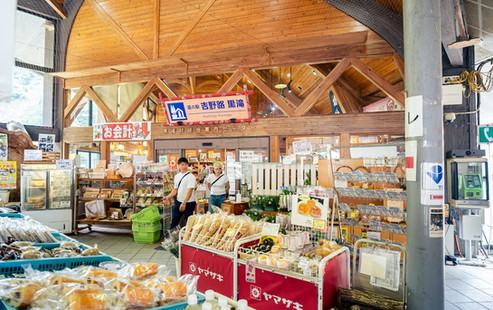


Yamazaki Y Shop
Kurotaki’s only convenience store, open daily from 07:00 to 19:00.
Handmade boxed lunches are a favorite among visitors; available 10:00-15:00.
Tel: 0747-62-2771
Open year round with the occassional irregular holiday.
The convenience store doubles as a community space, with tables and chairs made from local Yoshino cedar. Locals gather here, and travelers stop to snack. The handmade boxed lunches are a hit, offering a taste of local life with every bite.


mont・bell
Founded in August 1975 by Isamu Tatsuno, a renowned mountaineer, kayaker and philanthropist, Montbell set out to design and manufacture high-quality outdoor gear that stands up to Japan’s unpredictable climate and the demands of serious adventurers. Their early focus was on rainwear and sleeping bags but innovation has alwasy been at the heart of everything they do. In 1976, the company developed sleeping bags utilizing 'Dacron Hollofil II,' an advanced hollow-core fiber produced by DuPont (USA). This resulted in substantial improvements in heat retention, portability, and sleeping comfort. Due to their high performance and competitive pricing, these sleeping bags saw rapid adoption among climbers
Montbell apparel has also floursied as practical everyrday wear. It is not uncommon to see 'mont・bell' branded jackets, t-shirt and shoes wherever you go. Montbell also works with local governments to promote eco tourism to areas often overlooked as travel destinations and have even offered their expertise in disaster situations via their Outdoor Gientai project. Montbell also works with various organizations to realize a society where people with disabilities can live barrier-free.


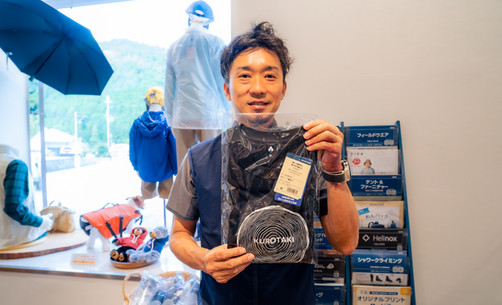
Yoshinoji Kurotaki (Montbell Room) is one of their latest outposts. Occupying about 162 square meters, the store offers a curated selection of functional outdoor apparel and gear alongside everyday travel essentials - a perfect drop by before or after a hike in the Yoshino-Kumano National Park. The store also offers exclusive original products, including two T-shirt designs and clear water bottles.
As the store is operated by the Kurotaki Village Forestry Association, they feature a sales area specifically specialized in forestry equipment. The designs for the original products were also developed based on ideas from the Forestry Association staff. Even the chainsaw-carved "Monta Bear" (bear figurine) at the storefront is a unique sight that can only be seen here.
The shop is open from 9:00 to 18:00 (March to November), and 9:00 to 17:00 (December to February), closed on Tuesdays and from December 30 to January 2.



Access:
Address: 22 Nagase, Kurotaki, Yoshino District, Nara 638-0233 Tel: 0747-62-2456
Hours: 7:00 - 19:00
Kawawake Shrine
Kawawake Shrine sits at the meeting point of the Kurotaki and Nyu Rivers, a place that once held deep significance for prayers for rain and the careful distribution of water to farmland. Today, the shrine retains a sense of grandeur, slightly elevated at a crossroads of mountain valleys that served as a vital transportation hub for pilgrims traveling toward Mount Omine.
The shrine’s identity has evolved through the layers of time. In its earliest days, residents worshipped the mountain behind the shrine, Mt. Miya, as a spirit of rain and fair weather. Because it stands where two rivers converge, it functioned much like a Mifubuchi (water-distributing) shrine, acting as a guardian of the community’s water supply. At some unknown point, but likely around the 11th century, it became a branch of Nara’s famed Kasuga-taisha Shrine. To reflect this, the main sanctuary consists of four distinct buildings in the classic Kasuga-zukuri style, built of unpainted wood with copper-plated roofs.
While the main sanctuary honors the four primary Kasuga deities, the grounds also feature a small, vermillion-painted Inari Shrine. This sub-shrine is dedicated to Ukano-mitama-no-kami, the deity of agriculture, plants, and the growth of rice. Shaded by ancient ginkgo and cedar trees, the shrine remains a spiritual heart for the surrounding rural districts.
The site also preserves a unique piece of religious history. Until 1874, a Buddhist temple called Nanko-ji stood on these grounds. While the temple is gone, its primary image of a seated wooden statue of Amida Nyorai dating back to 1536, is preserved nearby in the Dainichi-do hall. This cultural property serves as a silent reminder of the long-standing harmony between Shinto and Buddhist traditions in the Yoshino region.
Access:
Address: 394 Nakato, Kurotaki, Yoshino District, Nara 638-0221
Tel: 0747-62-2031
Guest House Kurotaki
Guest House Kurotaki is run by Rob, an 80s-born Australian Superhost. Located just 10 minutes from Yoshinoji Kurotaki Roadside Station and enclosed by forested mountains, it's a perfect countryside retreat to use as a bass to explore Tenkawa, Shimoichi and Kurotaki Viillages or as a stop on the way to Koyasan.
The entire guest house rents to one group, accommodating eight comfortably, but feasibly up to ten. All bedrooms occupy the second floor with a Western toilet upstairs; Japanese-style below. Outside there is a pizza oven, BBQ pit (which Rob will help you light) and picturesque scenery.

A woodworking workshop runs for two-night stays (5,000 yen per person, reservation required).
Check-in runs 15:00 to 22:00; checkout by 11:00 and 10% of profits are donated to The Life You Can Save, an effective altruism group. Guest House Kurotaki is closed from December 1st to April 1st, check official website for details.

Access:
Address: 598 Nakato, Kurotaki, Yoshino District, Nara 638-0221
Aka-iwa Red Rocks
Aka-iwa, or “red rocks,” is a stretch along the Kurotaki River where the riverbed and surrounding stones glow with a vivid, almost vermilion hue. It’s a place where nature’s palette shifts with the seasons; spring and summer paint the scene with sharp contrasts between the red stones and the lush greenery, while autumn drapes the valley in brilliant reds and oranges. Come winter, the rocks stand out against a quiet blanket of snow, creating a landscape of red and white that feels both serene and striking.
Getting down to the stream from the mountain trail takes a bit of effort. You pick your way carefully, scanning for the best vantage points along the water’s edge. Once you’re there, the real beauty reveals itself: the river runs clear, and the wet rocks beneath the surface shine in a deep, saturated red. The effect is rare, almost surreal.
Access
If you are a fan of the great outdoors:-
the following three articles should be right up your street (or mountain trail).


Author: NARA Visitor Center & Inn