
Odaigahara & Kamikitayama Village
- NARA Visitor Center & Inn

- Mar 9
- 12 min read
Easy Hiking the Higashi Odai Circuit and around Odaigahara
Far to the south of Nara City and the Yamato Basin lies Odaigahara. This mountainous terrain of twisting roads and hidden valleys boasts the highest rainfall recorded in Japan and is celebrated as a natural wonder.


Mount Odaigahara is not a single mountain peak as such, but rather a sprawling elevated plateau that straddles the border between Nara and Mie Prefectures.
Best of all, it’s an ideal day trip for beginner hikers with its well-maintained loop trails, clear signage, relatively gentle elevation changes, and expansive viewpoints.
On a clear day, you can even see Mount Fuji from its highest point, Mt. Hidenogatake.
In this guide to Odaigahara, we detail how you can get there by car or public transport, what the hike is all about, and the best places to stay depending on how you get there and what else you want to do.
Key Things to Know about Going to Odaigahara
The Higashi Odai Circuit Route (East Route) starts at the Odaigahara Visitor Center. It's a 9-km loop taking around three and a half to four hours and is a doable day trip by private vehicle or public transportation.


If you aim to stay a night or two and explore more, then where to stay largely depends on how you get there. With a car, you can choose any option, but if you're coming by train and bus, then the best options are either an onsen hotel halfway in Kawakami or a campsite and hut lodging in Wasamata.

There is a mountain lodge or ryokan on Odaigahara open during the hiking season, which is suitable for a day of relaxing with short walks, followed by a day of longer hiking. Other overnight locations will give you more variety of things to do.
Getting to the Odaigahara Visitor Center
The most convenient way to get to Odaigahara while enjoying the best scenery and stops along the way is by private vehicle, which could include a tourist taxi. From JR Nara Station, you can reach the Odaigahara Visitor Center by car in around 2 hrs and 40 min. The best of Odaigahara can also be accessed affordably on public transport and seasonal buses running from April to November.

Regardless of which transport option you choose, the road to the Odaigahara Visitor Center and the hiking trails are closed from early December to late April due to snow. Other locations within the Kamikitayama area can be enjoyed throughout the year.
Odaigahara by Bus: Operating from April 26 to Nov. 24, the Nara Kotsu Odaigahara bus runs from Aeon Mall Kashihara, via Yamato-Yagi and Kashiharajingu-mae stations, to Yumorionsen Suginoyu, Wasamatayama Tozanguchi, and finally Odaigahara Visitor Center.
Always check the above website for any changes to the schedule, but the bus generally arrives at Odaigahara Visitor Center by 11:16 a.m. and the bus back leaves at 16:00 (4 pm). If you walk the main hiking loop at a good pace, it typically takes around 4 hours or slightly less, but you will need to keep track of your time carefully.
Odaigahara by Car: By car from JR or Kintetsu Nara stations, you can follow the toll-free national route 169. After reaching the Kamikitayama area, you will turn onto the Odaigahara Driveway (Prefectural Road 40). It is a well-maintained, toll-free mountain road, but it has several hairpin turns and can be foggy.
At the Odaigahara Visitor Center, there is a spacious parking area, an information center, restroom facilities, hiking, snack and souvenir shops, plus a few eateries.


Odaigahara Visitor Center
Hiking the Higashi Odai Circuit Route
The Higashi Odai Circuit is a rough 9-kilometer loop that takes approximately 4 hours or less to complete. Despite its high elevation, the trail is well-maintained with wooden boardwalks and stone steps, making it accessible for intermediate hikers. The highest point of Mt. Hidegataka is 1,695 meters, and the starting point at the visitor center is 1,570 meters—or a difference of 125 meters.


Stage 1: The Ascent to Hinodegatake (Sunrise Peak)
Your journey begins at the Odaigahara Visitor Center with a gentle climb through a dense forest of beech and spruce. Reaching the ‘summit’ of Mt. Hinodegatake only takes 30 to 40 minutes of steady upward hiking, with a steep wooden staircase to climb near the end. From the top viewing platform, you are treated to a 360-degree panorama of the Kii mountain range and all around! On exceptionally clear and crisp days, you can see all the way to Mt. Fuji, over 200 kilometers away! To the south, the Pacific Ocean glimmers at the edge of the horizon.


Stage 2: Masaki Pass and the Mossy Graveyard
You then descend from the peak along an undulating wooden staircase and through a wooded area to the south-facing peak before entering the Masaki Pass. This area was devastated by a massive typhoon decades ago, and the exploding deer population kept eating the young saplings, so the forest never regrew.

You can still see the bleached, white skeletons of dead trees (tachikare) jutting out of a sea of bamboo grass. This descending trail consists of long wooden boardwalks that protect the fragile soil, making for a serene stroll where you can fully absorb the surreal atmosphere and embrace the wide-open scenery.


Stage 3: Ushi-ishigahara and the Statue of Jimmu
The boardwalk leads you into Ushishigahara, a wide-open plain named after the ‘cow stone’ found nearby. According to folklore, this large boulder resembles a reclining cow. Legend says that was once a malevolent spirit or a giant cow that was transformed into stone by a powerful monk to protect the region. This wide, mossy plateau features many scattered gray stones and smaller boulders that may resemble a herd of cows in the grass. Among the trees, you will also see a bronze statue of Emperor Jimmu, the legendary first emperor of Japan. The story goes that Emperor Jimmu was guided by a three-legged crow, Yatagarasu, through this area to the Yamato Nara basin.


Stage 4: Daijagura – The Great Serpent’s Back
As you near the end of the Oshishigahara plain, you should look out for a side trail that branches off toward Daijagura. Although it is difficult to say which is the best part of the loop, many say this is the most terrifying and beautiful viewpoint in Nara.


The name translates to ‘Giant (Dai) Serpent's (ja) Back (gura)’, and for good reason. The trail narrows until you are standing on a spine of jagged rock that juts out over a 1,000-meter vertical drop. There is, however, an iron chain railing, and over the edge you can see the Higashi-no-Kawa River.
Stage 5: The Shiokara-dani Valley Descent and Ascent
This final leg of the loop is the most physically demanding, so if you are not up to it, you can always double back the way you came and to the visitor center. The trail drops steeply away from the plateau, descending 160 meters into the Shiokara-dani Valley until you come to the Shiokara-dani Suspension Bridge. After crossing the bridge, you must regain the elevation lost for about half a kilometer, climbing a final series of steep zigzag stone switchbacks to return to the visitor center parking lot. This section can be quite tiring and demanding if you are not up to it!


Best Places to Stay near Odaigahara
You can find many splendid Nara countryside accommodations, but due to its remoteness and sparse population, places in the Odaigahara area are limited. Nevertheless, if you plan your trip and book ahead, these lodgings should have a comfy place available:
Forest Kamikita Hotel
Forest Kamikita is a tranquil onsen hotel located just off the main road and outside Kamikitayama Village. It’s located next to the forest and river and is focused on nature, relaxation, and outdoor activities. Basically, you will need a car to get here because the hotel cannot guarantee a pick-up and drop-off. They do, however, advertise a pickup from Kintetsu Yamato-Kamiichi Station during the winter season.
The hotel is about 12 km from the Wasamatayama Tozanguchisa bus stop. However, it’s a short walk into Kamikitayama village, where you can visit Izasa Nakata Niho Npo Honten, renowned for its Nara sushi wrapped in persimmon leaves. In the opposite direction as you cross the bridge, you’ll find a kissaten cafe and a small Yamazaki convenience store. Sightseeing locations nearby require a car, unless you are biking.


Hot spring: The highlight is its alkaline and soapy-feeling water, great for soothing skin, especially in winter. It includes a natural rotenburo for soaking outdoors while watching the mist rise off the river.
Cuisine: There is a simple breakfast provided, but dinner is a ‘kaiseki mountain feast,’ which can include amago or spotted river trout. Meals must be reserved three days in advance, and nearby alternatives are limited.
Facilities: Clean, spacious twin rooms with modern basics, free Wi-Fi, free parking, and strong support for hikers and cyclists, including bike storage and maintenance areas


Access:
Address: 552-2 Kawai, Kamikitayama Village, Yoshino District, Nara, 639-3701
Tel: 07468-3-0001
Wasamata Hutte
Wasamata Hutte is a newly renovated campground set amid forests and open fields that were once a ski slope. The location is perfect for early-morning climbs, stargazing, and panoramic views of nearby peaks. While Wasamasa Hutte is a self-contained facility, it takes about 1 hour and 30 minutes to hike along the road to the Wasamatayama Tozanguchisa bus stop, where you can catch the bus to Odaigahara Visitor Center. You can do the Odaigahara Odai Circuit route and then get off the bus here and still have time to walk the winding road to check in before dark, but please note the limited seasonal bus timetable and sunset times. This location does, however, offer more alternative things to do for an overnight or longer stay.

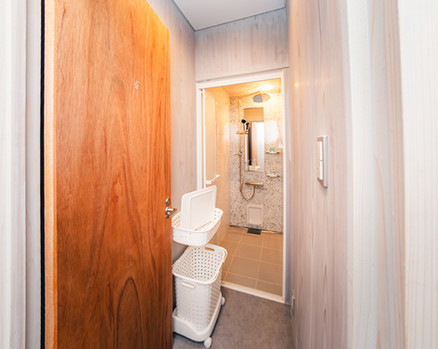
Accommodations: A mountain hut with dormitory-style and private rooms able to sleep up to about 20 people.
Meals & On-Site Dining: The facility includes a café/restaurant and lounge serving drinks, light meals, and snacks, plus a shop offering basic supplies, drinks, and outdoor gear rentals.
Facilities & Campground: Alongside the hut, there are camping sites (auto and free sites), a camp kitchen/ BBQ area, showers, laundry, and communal spaces. Parking is available, and the site adheres to a ‘leave no trace” ethos, so you have to take your trash back with you.





Access:
Address: 1055-1 Nishihara, Kamikitayama, Yoshino District, Nara 639-3704
Tel: 0746-83-0027
Full service are available between April and November with restrictions during winter
Matsumoto Minshuku
Matsumoto Minshuku is a simple, budget-friendly, self-service guesthouse. It’s about 6 km north of Forest Kamikita, or 6 km to the Wasamatayama Tozanguchisa bus stop. It operates mainly as a self-catering stay with basic facilities for visitors who are exploring the surrounding forests, rivers, and sightseeing points. Most guests arrive by car, and the focus is on outdoor activity and relaxed, no-frills accommodation. A key attraction here is the Shiratake Waterfall, which is only 10 minutes away on foot.
Note from the management:
We kindly ask for your understanding that our inn
is able to provide assistance in Japanese only.

Rooms: Three practical and spacious rooms accommodating up to 13 people in total. Bedding, air conditioning, and basic furnishings included, but not towels or toiletries.
Meals: This is a self-catering property, and guests should bring or prepare meals using the provided cooking equipment and basic supplies.
Facilities: There is a shared, open living space and optional paid laundry, dryer, and BBQ gear. Free parking is available on-site.
Access:
Address: 1131 Nishihara, Kamikitayama, Yoshino District, Nara 639-3704
Tel: 090-4761-0759
Please note* Reservations and inquiries are by telephone and in Japanese only,
Izasa Kakinohazushi
For anyone trekking through the scenic depths of Nara’s Yoshino district, a stop at Izasa Honten isn't just a meal—it’s a step back into a century of culinary craftsmanship. Located in the tranquil Kamikitayama Village a few minutes walk from Forest Kamikita, is the flagship store of Nakatani Honpo, a name that has become synonymous with Nara’s famous Kakinoha-sushi since its founding in 1921.

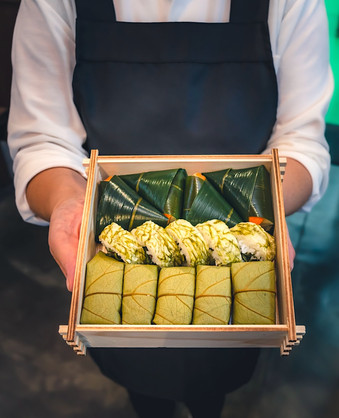
What sets this shop apart from your average sushi stop is its heritage as a former rice dealer. Their shari (sushi rice) uses a secret blend of dashi and vinegar, combined with domestic rice, to create a flavor profile that you simply can't find elsewhere. Their signature Izasa-sushi—beautifully wrapped in sasa bamboo leaves with a peak of pink salmon—is as much a work of art as it is a snack. At the Honten, you can find the traditional mackerel Kakinoha-sushi and unique regional items like their thick mackerel kelp rolls.
Whether you're a sushi aficionado or just a hungry traveler, Izasa Honten offers a taste of Nara’s history that has been perfected over the last 100 years. It’s more than just "fast food" for hikers; it’s a legendary piece of Yoshino culture.


What They Sell
Izasa is famous for its traditional "wrapped, rolled, and pressed" sushi. Their offerings change with the five Japanese seasons (Spring, Early Summer, Summer, Autumn, and Winter) to incorporate ingredients at their seasonal best.
Kakinoha-sushi (Persimmon Leaf Sushi): Their flagship product. It consists of bite-sized pieces of pressed sushi—traditionally topped with mackerel or salmon wrapped in persimmon leaves. The leaves provide a delicate aroma and act as a natural preservative, allowing the flavors to mature and mellow over time.
Izasa-sushi (Bamboo Leaf Sushi): A signature specialty named after the local legend of the "Boar King" (Izasa-oh). This is a distinctive salmon sushi wrapped in bamboo leaves (sasa), known for its elegant presentation and refreshing flavor.
Pressed and Rolled Sushi: Beyond the leaf-wrapped varieties, they sell various Oshi-zushi (pressed sushi), kelp-wrapped rolls, and Ehomaki (lucky fat rolls) for the Setsubun festival.
Modern Innovations: While deeply traditional, the company also innovates with products like "Shin Kakinoha-sushi" (Modern Kakinoha-sushi) rice balls, aiming to bring Nara's flavors to a wider, contemporary audience.
Today, Izasa Nakatani Honpo is recognized as a carrier of a "100-Year Food" culture (as designated by the Agency for Cultural Affairs in Japan), dedicated to preserving Nara’s traditional food heritage for future generations.


Access:
Address: 353 Kawai, Kamikitayama, Yoshino District, Nara 639-3701
Tel: 0746-82-0008
Hours: 8:30 - 17:00
Dec 31st 8:30 - 15:00 | Jan 2nd 9:00 - 17:00
Closed: Jan 1st & Irregular
Hidden Nature Gems of the Odaigahara Plateau
Namego-dani Valley
The Namego-dani Valley lies deep in the mountains, flanked by the narrow Route 309—better known as the Gyojakanrin Road. Here, the slopes are covered in evergreen conifers, while only the ridgelines are lined with deciduous trees. In autumn, the broadleaf trees along the ridges burst into color, winding upward like a dragon climbing the mountain. It’s a sight that only a few know, but those who do, make the pilgrimage.
This forest was left untouched for a practical reason. To stop forest fires from spreading, foresters planted fire-resistant moisture-rich broadleaf trees along the ridgelines to act as a natural firebreak, while the rest of the mountain was reforested with conifers. The result is a rare harmony: coniferous slopes, deciduous ridges, and in autumn, a spectacle that looks like a red dragon ascending the sky. The peak season for leaves is usually mid- to late October. In spring, cherry blossoms along the ridge offer a similar, softer image—another dragon, this time painted in pink.
The Gyojakanrin Road, despite being a national highway, is little more than a forest track. The narrow and winding road is picturesque in itself but best navigated with care. The area is popular with hikers and nature lovers due to its short walking routes, seasonal mushrooms (including nameko), and proximity to longer trail networks.
Access:
Shirataki Waterfall
Shirataki is a 25-meter segmented waterfall tucked away in the forested ravine, just across a picturesque bridge and down the road from a unique river-side postoffice. Accessible from the old road north of the Nishihara Tunnel on Route 169, with Matsumoto Minshuku being right nearby. it’s marked by a sign that details the waterfall including its place among the nation's top 1000 Waterfalls.


From the bridge, you’ll see a 7-meter twin waterfall up close, and beyond it, a straight cascade partially hidden by a large boulder. The left bank has a walking trail, though it’s somewhat eroded, and heading upstream reveals the lower cascade’s access point, then the upper cascade—a rugged, split waterfall with streams flowing from the surrounding rock face. Its layered, complex structure isn’t immediately apparent from below, making Shirataki a rewarding destination for those willing to explore a bit off the beaten path.
A selection of waterfalls from around the area
Access:
Address: 436 Nishihara, Kamikitayama, Yoshino District, Nara 639-3704
Akitsu-no-Ono Park & Seireino Falls
Akitsu-no-Ono Park is a serene location where magenta blue waters of the Otonashi River carve through dramatic river rock formations and mossy boulders. The park transforms in mid-April when cherry blossom trees drape soft pink petals over the emerald pools, offering a tranquil alternative to crowded Yoshino. Visitors can explore the mist-shrouded Seireino Falls via a spiral cliffside staircase or wander forest loops through ancient cedars. This secluded landscape perfectly captures the rugged beauty of South Nara and is a gem of a place for photographers, especially in spring and autumn. You can get there by local bus or taxi from the Yumori Onsen hotel.
Access:
Address: Sako, Kawakami, Yoshino District, Nara 639-3553
Daijagura Cliff
Daijagura Cliff, or the ‘Giant Serpent's Back’, is a short detour that leads off from the end of the Masaki Pass. When doing the Higashi Odai hike, make sure not to miss this! Daijagura is arguably the most dramatic geological feature in the Kii Peninsula. It’s a steep descent that leads you onto a narrow granite ridge, where the ground falls away on both sides into a sheer 1000-meter abyss.

At the tip, you are surrounded by a 360-degree panorama of the vast Higashinokawa Gorge, with the jagged peaks of the Omine Mountain Range rippling toward the horizon like frozen waves. Whether framed by the vibrant fire-reds of autumn or the ethereal white fog of summer, standing on the ‘serpent’s scales’ can create a heart-pounding communion with Japan's rugged mountain spirit.
A Closing Note
If you want to experience more of rural lifestyles, countryside charm, and traditional hospitality, you can explore Nosegawa Village—Japan's smallest village bordering Koya San, or Soni Village which is another hiker's paradise similar to Odaigahara.
Learn more about beginner hiking courses in Nara!
Thank you for reading Odaigahara & Kamikitayama Village.
We think you'll also enjoy the following articles.


Arthor: NARA Visitor Center & Inn


Comments